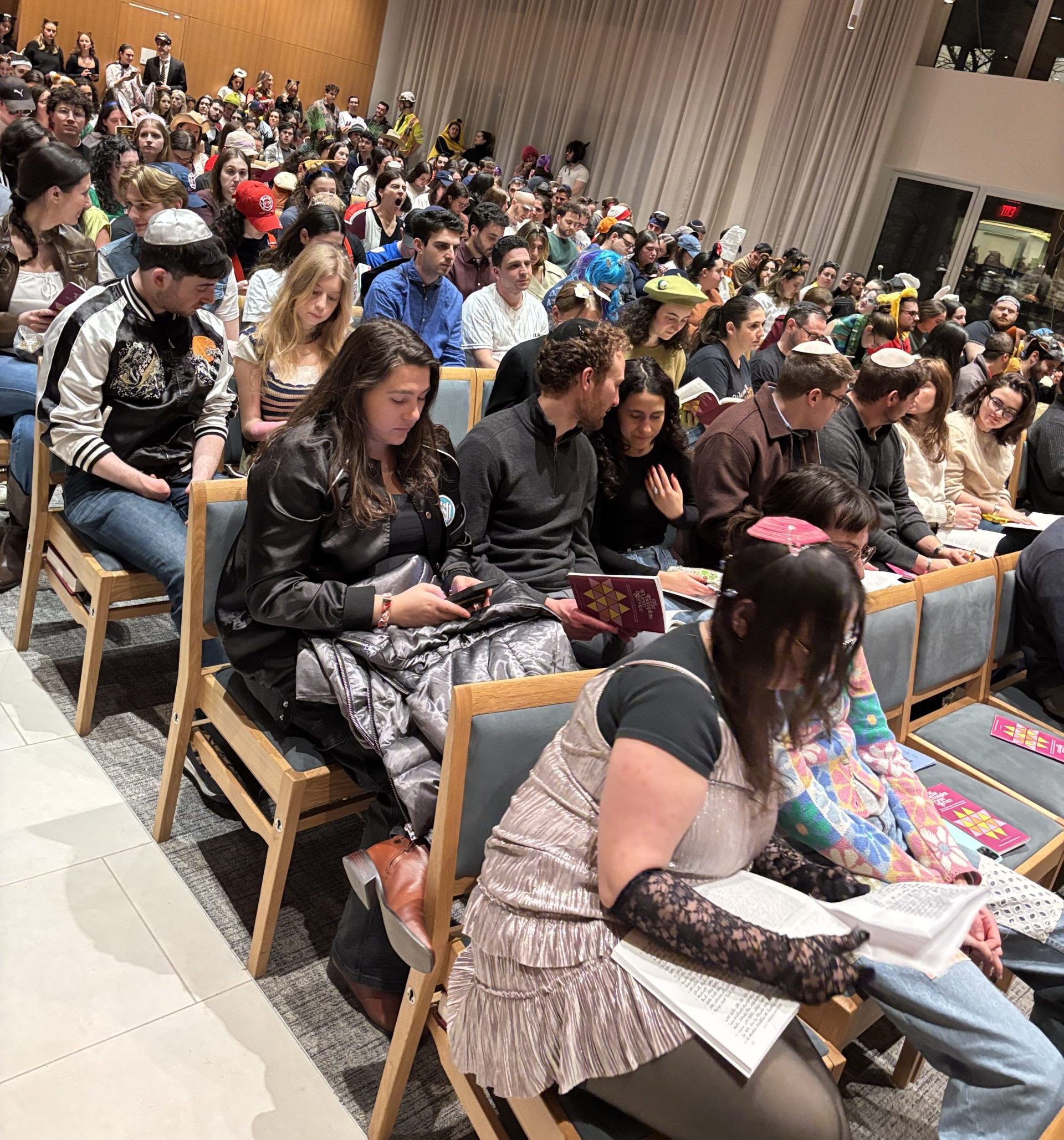
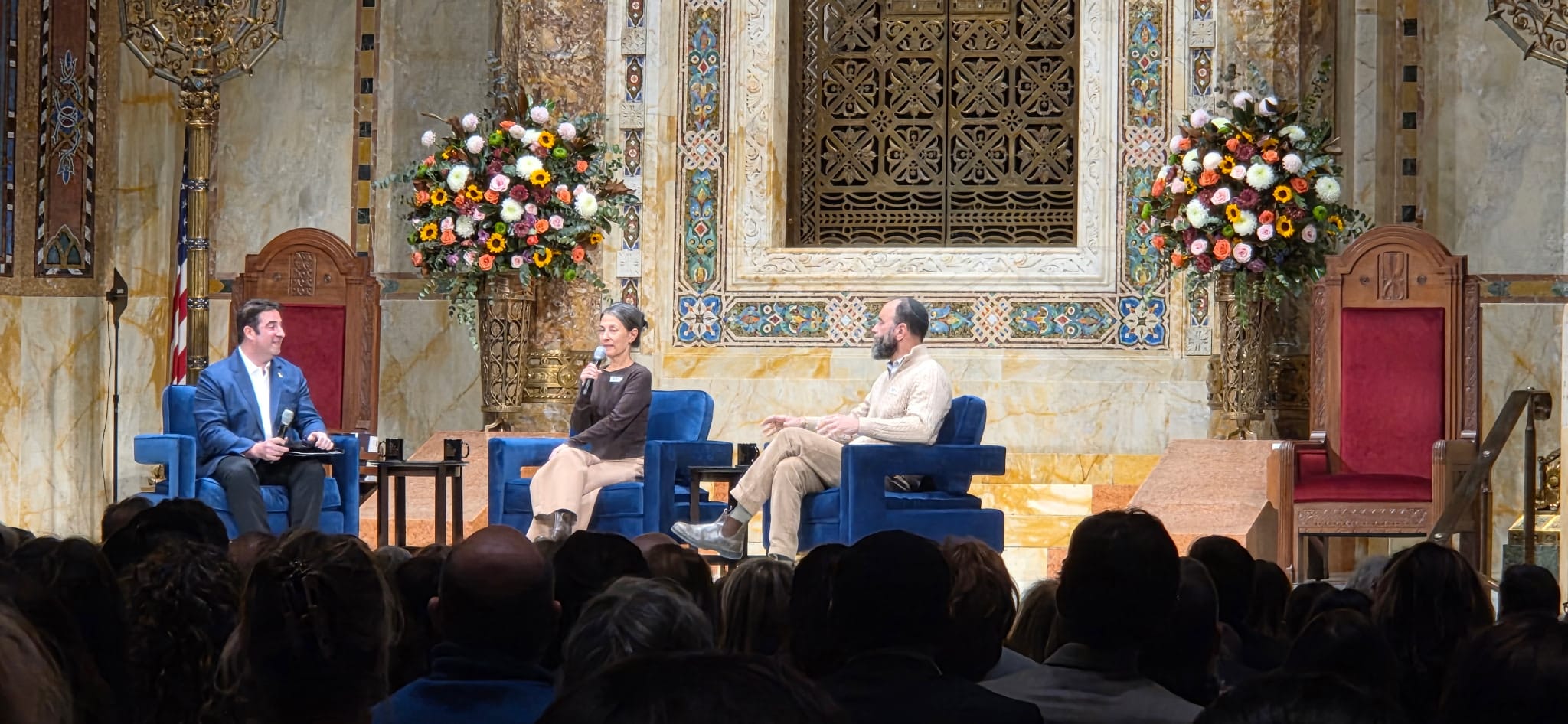
Recently, I attended the Jewish Futures Conference, sponsored by The Jewish Education Project. Over 250 Jewish educators gathered for a day of learning and discussion about what we are hoping for in the next 5 years and beyond.
More importantly, we took a deep dive into the philosophy of hope – what is it and what makes it so completely necessary for the Jewish world?
It is common knowledge that hope is an eternal Jewish concept. The Israeli national anthem is literally called HaTikvah, The Hope. What is “the hope?” A Jewish homeland. A place for Jews to live in peace as Jews. A place where all Jews can find refuge.
What is “the hope” for Jews in the Diaspora? Given the rise in antisemitism, given the events of the past five years – pandemic, October 7, and given the state of our union – where do we go from here and how do we get there?
As educators, we know for sure that the hope for the future is the children, the Jews of tomorrow. We can feel hope deep in our hearts, but the powerful idea behind hope that we discussed at the conference, is that it must lead to action. Hope is not passive. Hope inspires action. Actions achieved inspire more hope. Hope with action builds resilience. It also builds community and belonging. When we work and hope together, we can accomplish even greater goals. The children will benefit from our actions – building up our schools, supporting our educators and teachers, making Judaism relevant and engaging.
In our time, it is sometimes hard to be hopeful. All the more so because of the recent events at Bondi Beach in Australia and the arson attack on a synagogue in Jackson, Mississippi. Rabbi Joseph Solveitchik, a leading 20th century Modern Orthodox rabbi and Jewish philosopher, teaches that “when we suffer, we shouldn’t deny it or explain it away. Instead of asking why this is happening to us, he says we should ask, “what should we do now.” For him, hope is something you build through action, by choosing to respond, and moving forward, even in the dark.
Further, we learned with the conference keynote speaker, Dr. Oded Adomi Leshom, the founder of the International Hub for Hope Research, at Hebrew University in Jerusalem, who taught, “We have a desire accompanied by an expectation of fulfillment. This desire, this hope, requires your actions.” To make your hope a reality, you must engage, educate, volunteer, participate, give.
Has hope benefitted the Jewish people? Yosef Hayim Yerushalmi, a modern Jewish historian who explored memory, exile, and identity, wrote in Toward a History of Hope, that “Jewish hope has endured even when it was fragile. Sometimes it was mixed with despair. Sometimes it was just a thread. But the act of reaching for hope, however shaky, became part of Jewish survival.”
The Jews continue to hope, to survive, to overcome obstacles, to act through despair. We continue to “do” Jewish – lighting candles on Shabbat, going to shul, donating money, engaging in Torah study, supporting important programs like USY and Hillel for our young people. Can we do more? Yes! Support our religious schools and the educators who lead them. Provide more creative ways for Jews to engage with one another. Support our clergy – the cantors and rabbis who work tirelessly on behalf of the Jewish people, who console us when we are in mourning, and who celebrate with us when we are joyful. Be an active participant in the Jewish community, your synagogue, Men’s Club, Sisterhood, and USCJ.
At the end of the Jewish Futures Conference, we were blessed to hear Rachel and John Goldberg-Polin, the parents of Hersh, who was killed in captivity in Gaza. Rachel’s message to the 2400 people in attendance was, “When we think about hope, we must remember that it’s mandatory.” And John’s message, “The core piece is education, giving people tools to understand what they are a part of and what they can be proud of.”
With education for children and adults and with actions that support our Jewish communities, our hope for a Jewish future will be fulfilled.