By: Rabbi Noam Raucher, MA.Ed – Executive Director, FJMC International
A synagogue can be full and still feel lonely. You can see it in the easy conversations after services — the updates about work, the jokes, the “how’ve you been?” that rarely invites an honest answer. Many men have learned to be present without being known. They show up, they carry responsibilities, they make minyan when needed — and they go home with the same private burdens they arrived with.
That’s why men’s groups in synagogues are urgent. Not because men deserve special attention or the “boys club”, but because isolation and emotional constriction have consequences for everyone: for partners and children, for communal culture, and sometimes for life itself. The data is blunt: men die by suicide at far higher rates than women, and most suicide deaths are men. Loneliness, untreated depression, and the shame of feeling like a burden don’t always stay quiet. Sometimes they end in tragedy.
Judaism already has a sacred language for what men are missing: the minyan. We tend to treat it as a technical threshold — ten bodies, certain prayers. But its earliest echo is not about liturgy. It’s about moral weight. When Abraham pleads with God over Sodom, he doesn’t ask for perfection. He asks for a core: “What if ten should be found there?” Ten is the smallest number that can hold a place together.
But the Torah also insists that ten can fail. Ten can spread fear instead of steadiness. When the scouts return from surveying the promised land, ten of the twelve bring back a report that collapses the people’s courage from the inside. “We looked like grasshoppers to ourselves,” they say, “and so we must have looked to them.” Fear doesn’t just make you anxious; it makes you assume the world sees you with the same contempt you feel toward yourself. The result isn’t merely private insecurity — it becomes communal disintegration: panic, tears, paralysis. Ten men became the engine of a catastrophe.
That’s the spectrum. Ten can be a shelter, or a stampede. Ten can save a city, or scare a nation into decades of wandering. Which means the question is not whether men gather. Men already gather — at games, online, at work, around politics, around habits that numb. The question is whether a synagogue will sanctify gathering: whether it will create a men’s space that forms courage, empathy, accountability, and allyship — so what spreads among men is not cynicism or bravado, but presence.
At FJMC International, we’ve watched this up close. We recently surveyed our community, and the answer was consistent across geography, age, and affiliation: what made experiences meaningful — and what kept men coming back locally, regionally, and internationally — was not the program alone. It was the relationships. Men returned because they found other men they could trust.
That discovery also clarified our identity. FJMC is no longer just an acronym tied to an older organizational name. Today those letters stand for our four pillars: Friendship, Judaism, Mentorship, and Community. These aren’t marketing words. They are the proven ingredients of spiritual and emotional sustainability for men trying to live decent lives in a world that trains them to go it alone.
In that vein, we know how sacred a space for just ten men can be. Ten is not a crowd. Ten is intimate enough for honesty and large enough for accountability. Ten is the difference between “I’m ok” and “Actually, I’m not.” Ten is where a man can stop performing strength and start practicing it.
Joseph’s brothers — ten of them, without Benjamin — arrive in Egypt carrying hunger, fear, and an unfinished history they’ve avoided: guilt they can’t outrun and a brother they once treated as disposable. When Benjamin is threatened, Judah steps forward and says the sentence every worthy men’s group must learn: take me instead — “Let your servant remain as a slave… and let the boy go up with his brothers.” In that moment the ten transform from fear-spreaders into moral anchors, and reconciliation becomes possible not because everyone is suddenly good, but because someone becomes responsible.
That is the sacred argument for a men’s group in a synagogue: men are not finished products. They are capable of becoming. And they rarely become alone.
Modern men are navigating conditions that reliably produce isolation. Friendships thin out after marriage, after kids, after divorce, or after relocation. Add the pressure to perform competence — financially, emotionally, professionally — and many men end up with a cramped inner life. They may talk constantly and confess nothing. They may “support” others while never asking for support themselves. They may want to be allies — at home, for women, for LGBTQ people, for the vulnerable — and still lack a community where they can practice listening without defensiveness and accountability without collapse.
A synagogue men’s group can be that practice space, if it’s built wisely. It should be inclusive of all men in, and connected to, the Jewish community: men born Jewish, men who chose Judaism, and men who are “friends to the Jews” — partners, relatives, and fellow travelers whose lives are bound up with Jewish life and Jewish fate. It should be less about debating the world and more about repairing it from the inside. And it should have clear norms that make it safe: confidentiality, humility, no fixing, no shaming, no dominance.
Because that is what loneliness asks of a community. To be held. A men’s group is where men learn to notice the person disappearing in plain sight — the guy who stopped coming, the guy who is always “fine,” the guy whose jokes are getting darker, the guy coming undone after a breakup, job loss, illness, or grief. It’s where men learn to reach out before a crisis becomes a cliff.
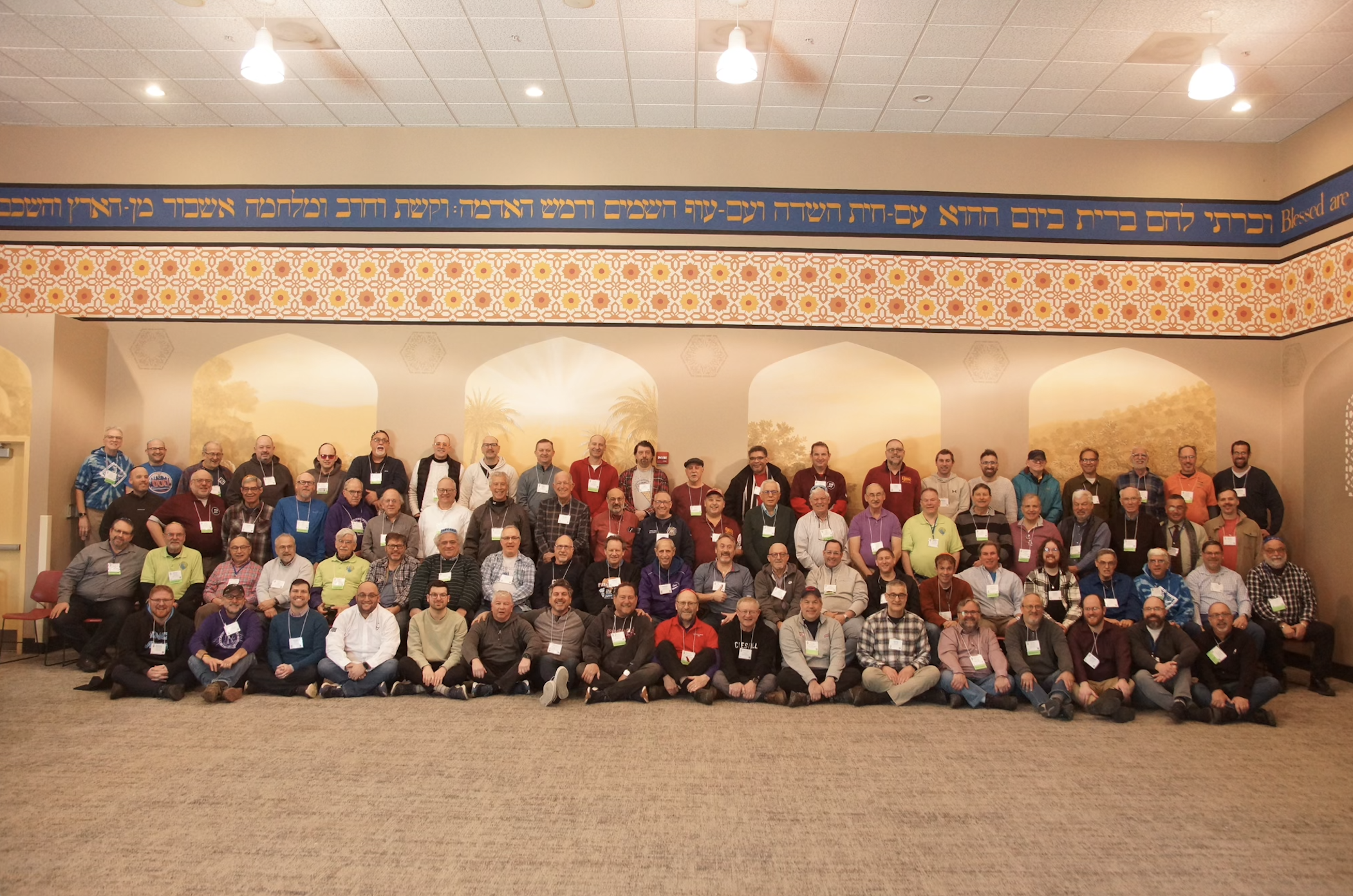
The good news is: synagogues do not have to invent this from scratch. FJMC International has resources to help clergy and communities make it real: Hearing Men’s Voices, and our free, weekly, online support group for men co-hosted with the Jewish Community Mental Health Initiative; regional retreats that model what sacred brotherhood feels like when done with depth and integrity; community service opportunities that translate values into action; plus educational offerings like The Torah of Ted Lasso, holiday material like Seasons of Brotherhood, and our newest podcast, Mamas’ Boys where we discuss what it means to be a Jewish man today.
Ten can be enough to change a place. Judaism has been telling us that for centuries. The choice is whether our “ten” will look like Abraham’s — steadying a city — or like the spies — unraveling a people — or like Joseph’s brothers at their best: men who refuse to leave the most vulnerable behind.
If you’re ready to build that kind of “ten” in your community, I’d love to help—reach out to me directly to start a group, learn about our curricula for men’s groups, or strengthen the engagement of a current club, and we’ll set up a brief conversation to map the next right steps. You can reach me at [email protected] / 626-375-8122